How Nigeria’s Electricity Grid Works: A Simple Guide
Electricity is essential for modern life, yet about 40% of Nigerians translating to roughly 92 million people currently do not have access to power from the national grid. For those who are connected, understanding how power reaches your socket and why it sometimes doesn't can feel complicated.
Here is a simple breakdown of how Nigeria’s electricity system works, the challenges it faces, and how new laws are changing the future of our power supply.
What is the Electricity Grid?
Think of the electricity grid like a massive water supply system for the entire country.
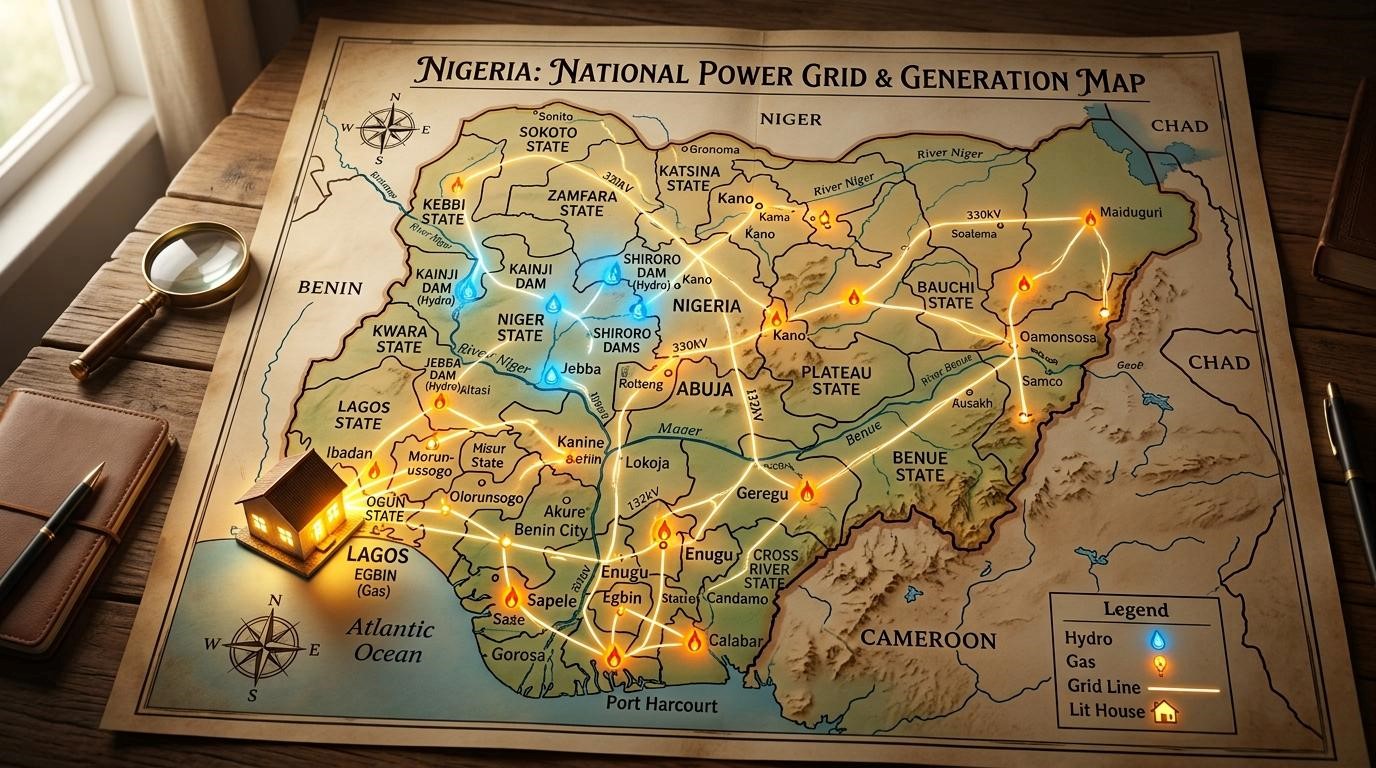
Instead of water, it produces and moves electrical power. The "grid" is the complete, interconnected network of power plants that create the electricity, the massive metal towers and wires that transport it across the country, and the smaller poles and transformers that finally bring it into your street and home.
In Nigeria, the electricity on this grid is primarily generated by burning natural gas (which makes up about 86% of the national capacity), while the rest is produced using the force of flowing water, known as hydroelectric power.
How does electricity get to your home?
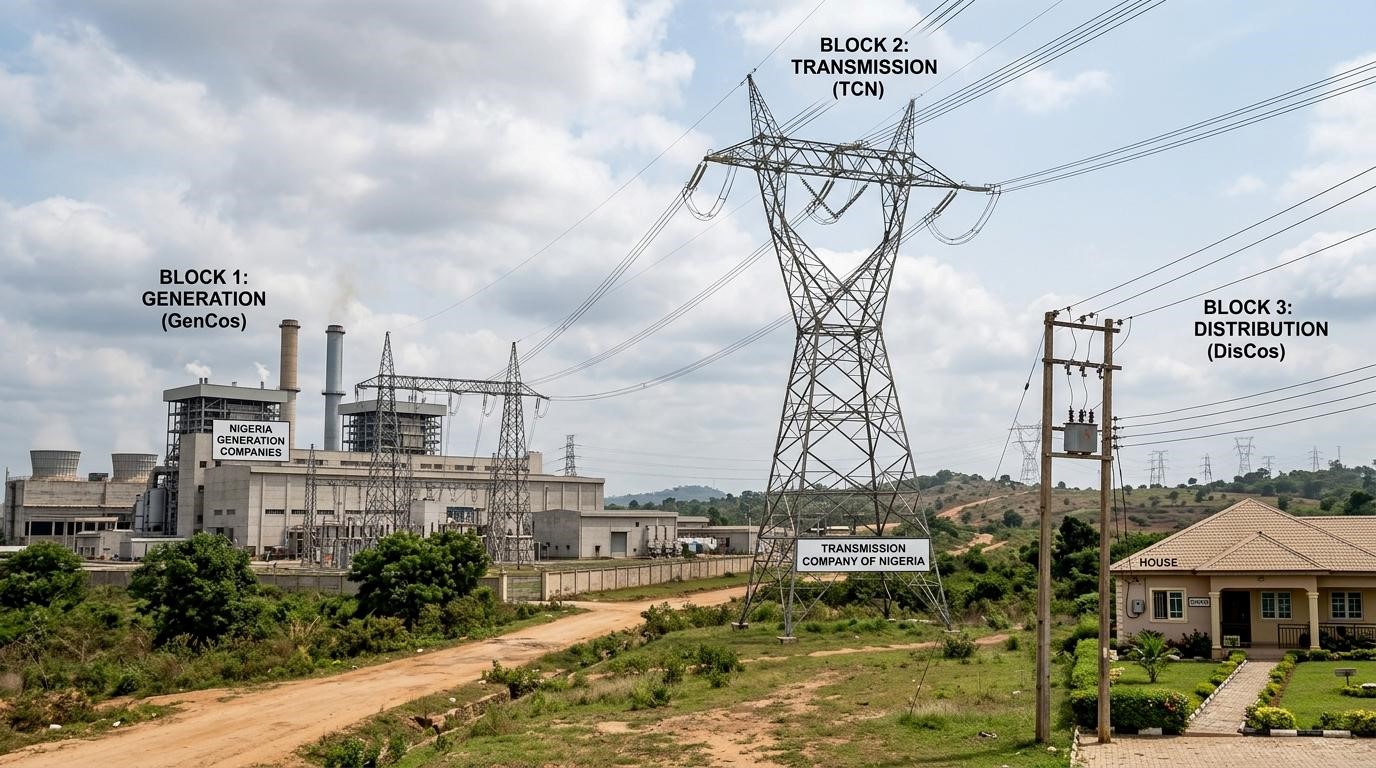
Delivering electricity from a power plant to your television happens in three distinct steps:
1. Generation (Making the Power)
The journey starts with Generation Companies (GenCos). These are the 23 large power plants connected to the national grid. They act like giant engines, spinning fast to create bulk electricity.
2. Transmission (Moving the Power)
Once the power is created, it has to travel long distances. It is handed over to the Transmission Company of Nigeria (TCN). TCN acts as the national highway for electricity. Because power loses its strength over long distances, TCN "steps up" the power to extremely high voltages so it can travel quickly across the country on massive steel towers.
3. Distribution (Delivering the Power)
High-voltage power is too dangerous for a household appliance. So, when the electricity reaches your city, it is handed over to the Distribution Companies (DisCos). The DisCos take the power off the high-voltage highway, use transformers to reduce the pressure (voltage) to safe levels, and send it through the local poles to your home's meter. DisCos are also the companies that send you your electricity bill.
Why is the power supply often unreliable?
If the system has three steps, a failure at any stage can leave you in the dark. However, the most common reasons for power failure in Nigeria come down to a few major bottlenecks:
Traffic Jams on the Power Highway: The transmission network lacks modern Supervisory Control and Data Acquisition (SCADA) computer systems to monitor power flow in real time. When there is a sudden drop or spike in power, operators cannot see it fast enough to isolate the problem. This causes a chain reaction that trips the entire system, resulting in a national grid collapse.
Not Enough Power for Everyone: Even when the grid is working perfectly, the power plants simply do not generate enough electricity to meet the demands of over 200 million people.
Money Shortages: The power sector struggles to collect enough money to pay for upgrades. Many people are not properly metered, bills go unpaid, or power is lost through old equipment. Because the DisCos struggle to collect revenue, they struggle to pay the system buffers—like the Nigerian Bulk Electricity Trading Plc (NBET) which leaves the whole system starved of the funds needed for repairs.
Because of this unreliability, millions of Nigerians are forced to rely on expensive, noisy fuel generators to meet their daily needs.
What do the new reforms mean for ordinary people?
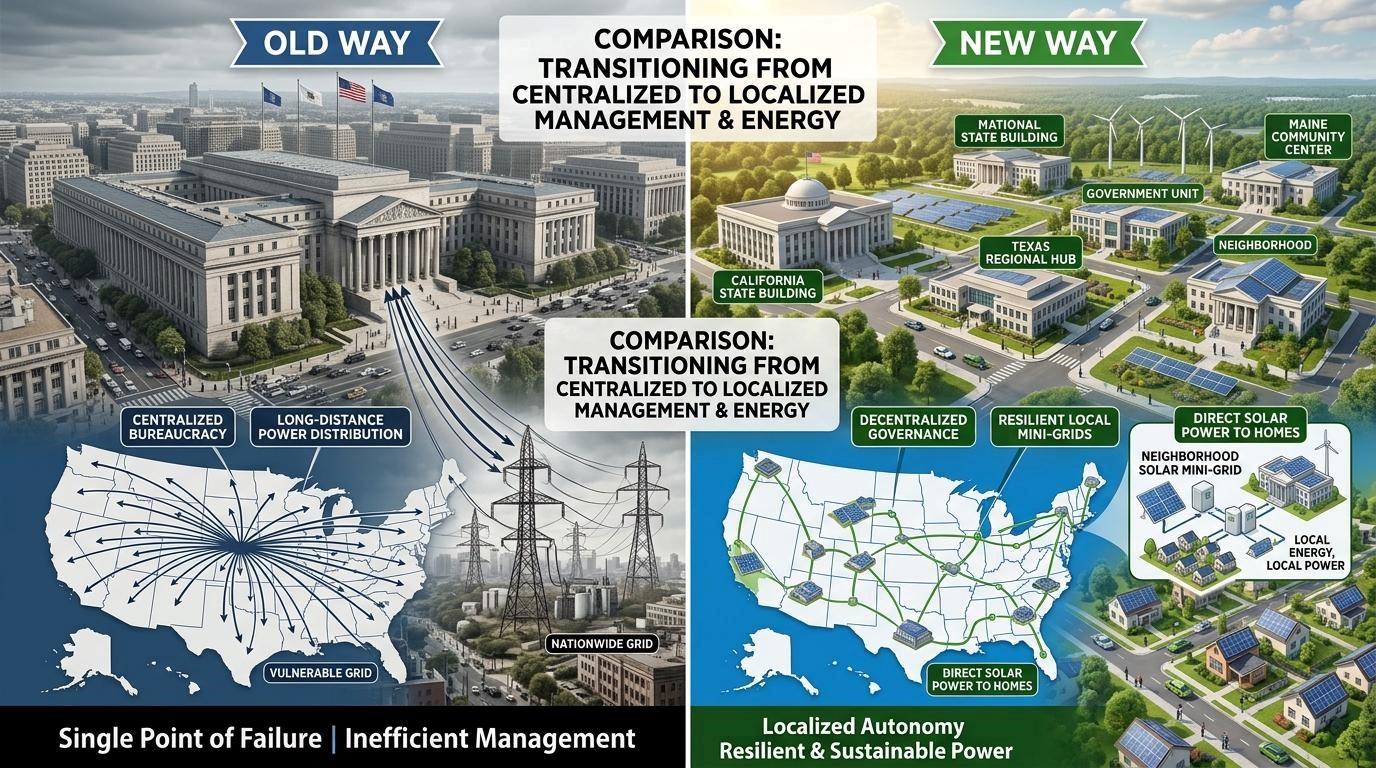
For decades, the entire power grid was strictly controlled by the federal government. But in 2023, a massive reform called the Electricity Act 2023 was signed into law, changing the rules completely.
Here is how this benefits you as a consumer:
Local Control: State governments now have the constitutional power to create and manage their own electricity markets. As part of this decentralization, the Nigerian Electricity Regulatory Commission (NERC) has formally transferred regulatory oversight to several states, including Lagos, Edo, Enugu, Plateau, and Oyo.
Faster Problem Solving: Instead of taking your complaints about estimated billing or broken meters to a distant federal agency, you will soon deal with a local State Electricity Regulatory Authority (SERA). Customer service and dispute resolution will happen right in your state.
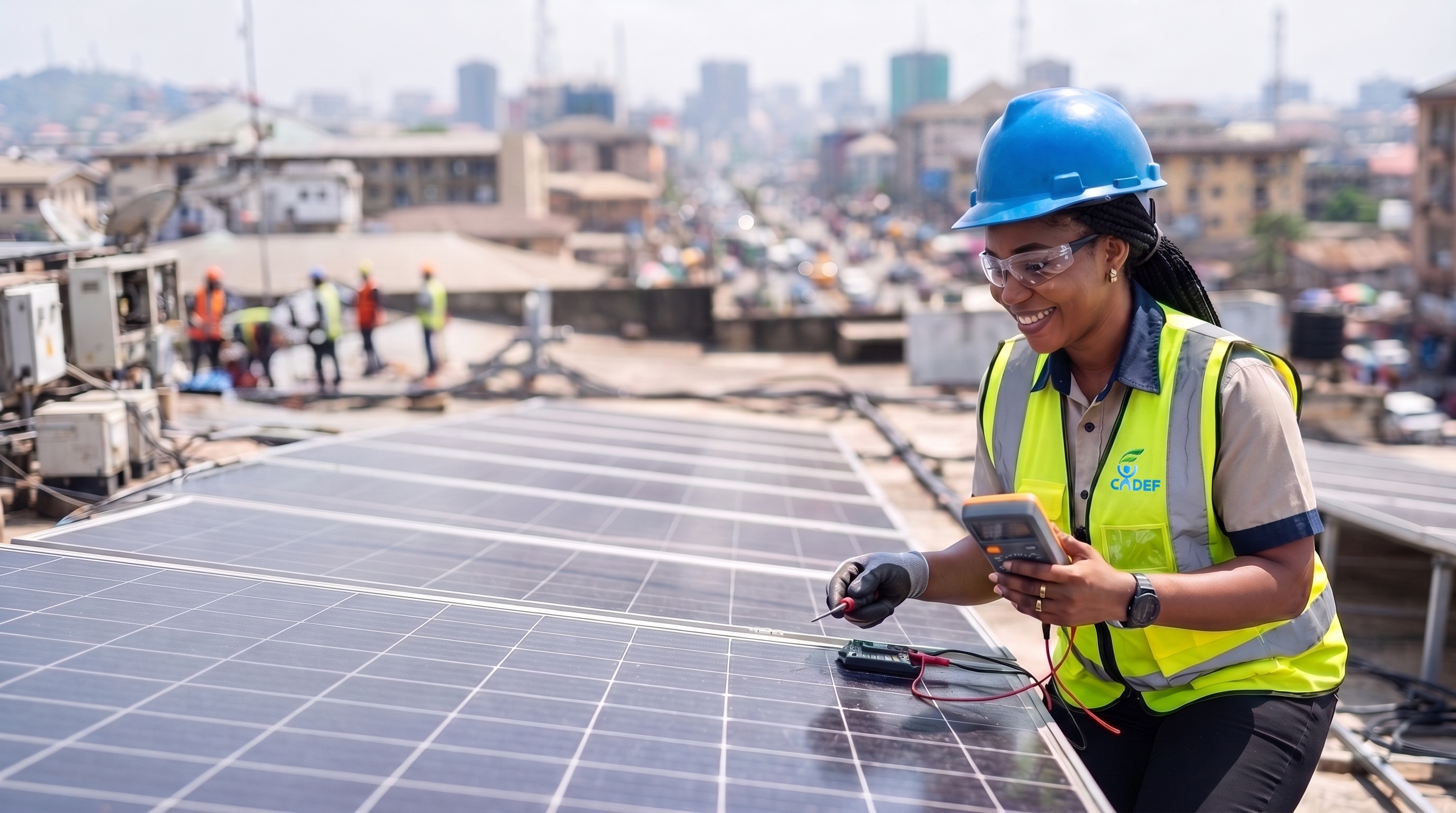
Neighborhood Mini-Grids: Communities no longer have to wait for the national grid to reach them. The new laws make it easier for private companies to build "mini-grids" small, independent solar or gas power networks that serve a single neighborhood or business district. This means communities can bypass the fragile national grid entirely and enjoy reliable, 24/7 localized power.
Glossary of Key Terms
DisCos (Distribution Companies): The local companies responsible for safely delivering power to your street, providing your meter, and collecting your monthly bill.
GenCos (Generation Companies): The companies that operate the large power plants (using gas or water) to create electricity.
TCN (Transmission Company of Nigeria): The government-owned company that operates the massive, high-voltage towers and wires that transport bulk electricity across the country.
SERA (State Electricity Regulatory Authority): The newly created state-level agencies that handle local electricity rules, pricing, and consumer complaints in your specific state.
Mini-Grid: A small, localized power network (often using solar panels and batteries) that provides electricity directly to a specific community or neighborhood without relying on the national grid.
Source References & Further Reading
World Bank & Punch Reporting (2022): Details the 92 million Nigerians (approx. 40%) lacking access to the electricity grid. Read the Global Deficit Report.
Nigerian Electricity Regulatory Commission (NERC):
○ Update on Electricity Regulation: Transition to State Electricity Regulators.
○ Who Does What Under The Electricity Act 2023.
Policy and Legal Advocacy Centre (PLAC): Full gazetted text of the Electricity Act 2023.
Discos (Distribution Companies): Discos.
Transmission Company of Nigeria (TCN): A Brief History and Operational Mandate.
Wikipedia: Electricity Sector in Nigeria (Provides general background on GenCos, DisCos, and historic unbundling).